.post img { border:10px solid #191919; dotted:2px; } a:link{ colour brown } h2{ colour: brown;| }
  • Maiyegun's Diary

  • | Breaking News
  • | Sports
  • | Entertainments
  • | Politics
  • | Opinions |

Maiyegun General

Wednesday, 2 September 2015

Teen who 'pressured her boyfriend into suicide' to face trial in October

Michelle Carter, who was 17 when her boyfriend committed suicide, has been facing trial due to the texts she sent him before he died


The two were 17 and 18 when Conrad Roy took his own life Photo: Facebook

Texts from Michelle Carter have revealed her possible part in the tragic suicide of her boyfriend, Conrad Roy. The teen, who was 17 at the time of his death, has been accused of manipulating him into committing suicide.

She knew how her texts would look to prosecutors, and the family of her late boyfriend - texting her friend: “[If the police] read my messages with him I’m done. His family will hate me and I can go to jail,” after her partner, 18, took his own life.

Before he died, she pretended to her friends that he had gone missing, all the while exchanging hundreds of texts with him.

“You’re finally going to be happy in heaven. No more pain,” she told him in one message. “It’s okay to be scared and it’s normal. I mean, you’re about to die.”

Many of her messages to him seemed to imply that Roy, who had previously attempted suicide, would be better off dead.

If he wavered in his resolve to commit suicide, Carter replied forcefully. More texts read: “You always say you’re gonna do it, but you never do,” Carter complained. “I just want to make sure tonight is the real thing.”

“You can’t keep pushing it off, though. That’s all you keep doing.”

His grandmother told WBZ that although Roy was depressed he "seemed to be pulling out of it". She said when she heard of the texts: “I felt like the blood drained out of me. I don’t believe this, it’s too horrific.”

The district attorney's office said: “It is alleged that Ms. Carter had firsthand knowledge of Roy’s suicidal thoughts. Instead of attempting to assist him or notify his family or school officials, Ms. Carter is alleged to have strongly influenced his decision to take his own life, encouraged him to commit suicide and guided him in his engagement of activities which led to his death.”

The two met in 2012, and struck up a relationship that was mainly conducted online and by text message.

Carter researched how Roy could kill himself, and sent him details about different ways he could do so.

After his death, Carter became an advocate for mental health, writing on Facebook: “Even though I could not save my boyfriend’s life, I want to put myself out here to try to save as many other lives as possible,” and organising events in memory of her late boyfriend.

A judge will decide whether Carter will face charges for his death. She will appear in court again on the 2nd of October.

Telegraph

AppointmentsGate: The President Of Northern Nigeria? By Abiodun Ladepo

Hurray! It is September and Nigerians from the South can now expect to be called upon to serve their country as members of President Buhari’s cabinet. No, they are not going to be the National Security Adviser. They are not going to be Accountant-General of the Federation.

Biodun Ladepo

They are not going to head DSS, EFCC or INEC. They are not going to head the Nigerian Ports Authority or the Nigerian Maritime Administration, Safety and Security Agency (NIMASA). They are not going to head Customs or Immigrations. Listen; there is quite a long list of serious positions they are not going to have because those positions have gone to the North. In the infinite wisdom of President Muhammadu Buhari, after having searched the length and breadth of Nigeria looking for competent people who are also not tainted by the stain of corruption, these positions have already gone to the North where there is an abundance of incorruptible and competent Nigerians.

If we applied to the Obasanjo Third-Term saga or to the Goodluck Jonathan I-want-a-second-term saga the logic being espoused today by diehard Buharists as justification for the lopsidedness and apparent ethnocentric appointments he has made so far, Buhari would not be President today. This is because, as far as Obasanjo and Jonathan were concerned when they were in office, they were the best thing to happen to Nigeria since sliced bread, and so deserved to continue in office regardless of what Nigerians said. Some early-day Buhari sycophants are now telling us that competence and integrity are the only yardsticks by which Federal appointments are made in Nigeria. And if the President is only able to find every single appointee he needs in Katsina State…perhaps even just in Daura, as long as they are competent and without blemish, he should go ahead and make those appointments. They have also arrogated to Buhari the exclusive right to appoint people without consulting the party - a literal explanation of the powers vested in him by the Presidential system of government we are practicing in Nigeria.

Fortunately, in the room where these sycophants are conspiring and collaborating to feed poison to Buhari sit a couple of 1000 lbs gorillas – the gorillas of Nepotism, Sectionalism, Rank Discrimination and Marginalization. These people ignore those gorillas at their own perils. Buhari ignores those gorillas at his own peril. Some of us still remember what happened to Aguiyi Ironsi when he failed to recognize these same gorillas at the time. With over 250 ethnic groups and different languages, only a foolish leader will fail to treat Nigeria as a diverse entity of equal…EQUAL parts.

True, Buhari reserves the right to appoint whomever he wants (although in some cases, the Senate has a say), the President did not come from heaven. This President in particular…this President that we all so warmly welcomed back into our lives after Decree 4…that we so massively trooped out to elect…did not come from heaven. Before he became available for us to elect in the general election, he went through the APC primary. People…not some self-righteous labels called “competence” and “integrity” today…physically sat in blazing sun and heavy rains to help him win the primary. People…human beings…spent their time and personal resources (not everybody that spent money to get him elected is a thief) before he was able to defeat Atiku Abubakar. The support that many key party members and delegates gave him caused them permanent damage to their anti-Buhari friends in the party and throughout the rest of the country. And these people who bent over backwards to get Buhari to Aso Rock are not all from the North. They are all from all over the country. So, how come these “competence” and “integrity” criteria are only finding and qualifying folks in the North to the detriment of the Southern part of the country?

Governance is governance and politics is politics. They are separate and distinct fields. But in democracy, they are intertwined. A democratically-elected Executive cannot govern in a vacuum, completely removed from the influence of the party on whose platform he rode to power. And let me put this straight and clear: I have no problem with any of the appointments he has made so far. I trust his judgment in picking those people who are, by the way, Nigerians too. I trust his judgment in putting them in the specific offices he has put them. But the politics of governance requires that he manages those announcements in a better way. Why not delay some of these appointments that went to the North (while still keeping the slots for the specific individuals he has in mind) until after announcing some names for the rest of the country? I am sure that would not have generated the kind of controversy we have right now. The rest of the country will not feel sidelined even though they really are being sidelined. You see, just like in jurisprudence, it is not enough to be fair; you have to be seen to be fair. Right now, Buhari is not being seen as fair to the rest of Nigeria.

This is the point we are trying to make but his apologists are now telling us that as long as the country is being run well, it does not matter the ethnicity of the appointees. If this was true, how come there was the strident clamor for the Presidency to return to the North? If it didn’t matter where competent people came from, how come we didn’t get our Vice President too from the North? Couldn’t we have found a more qualified VP from Kano State? We as a people and our leaders in particular do not learn from the past, even the recent past. Not too long ago, bootlickers and sycophants egged Jonathan on when he started to brazenly appoint people to positions of import that were mostly from the South-South and the East. They told him to continue dancing; that they were watching his back. They told him it was the turn of the “minorities” and he better make good use of it because once power returned to the North, their people would be relegated to second-class citizenship again. Many people, especially from the North, joined the rest of us in the struggle to remove Jonathan from power because of that singular action…shutting the North out of key positions. His supporters patted him on the back for “putting those northerners in their place.”

When this latest round of appointments ignited the level of uproar Buhari did not expect and Buhari saw he was hemorrhaging a considerable amount of goodwill, he quickly dispatched his Media Adviser, Femi Adesina, to assuage the feelings of the aggrieved public by promising to “balance” future appointments – an indirect admission of the fact that the appointments so far were DELIBERATELY skewed in favor of the North. Why did he not make the North wait for “next appointments” if he was being fair to all of Nigeria? Are Southerners like Daura cows to be herded in September when he throws token ministerial appointments at them?

This self-inflicted wound allowed mischief makers to quickly remind those of us who supported Buhari as if our lives depended on it of what Buhari said when he was in the U.S:

“Going by election results, constituencies that gave me 97% cannot in all honesty be treated, on some issues, with constituencies that gave me 5%. I think these are political realities. While, certainly there will be justice for everybody but the people who voted, and made their votes count, they must feel the government has appreciated the effort they put in putting the government in place. I think this is really fair."

That unfortunate statement, which came from his heart and which his media team tried to downplay and walk back by claiming he was quoted out of context has now come to fruition. Buhari got more votes from the North; he is from the North. And so, his government must cater more to the interests of the North than those of Nigeria as a whole. In essence then, the man we all elected to the highly-esteemed position of President of the Federal Republic of Nigeria…the man whom the North, by itself, failed to elect three times before… has demoted himself to President of Northern Nigeria.

A few ignorant people argue that appointees don’t necessarily benefit their ethnic regions or villages anyway; so why bother about where they come from at all. Such fallacy! Each head of the major organizations to which Buhari has appointed people gets to appoint scores (if not hundreds) of others; and they get to award contracts. If they too go by the Buhari doctrine of hiring mostly people from their region or only people they know personally, then we would really be in trouble in this country.

Some other ignorant people argue still that Buhari just started a four-year term and we should wait for about two more years before criticizing him. I think only in North Korea would you find a population in “unanimous support” of its leader from Day 1 until he dies. Not even Russia gives its leader carte blanche for two out of four years. We are not Daura cows, I repeat.

The most laughable argument is that which accuses Buhari critics of trying to micro-manage him. In fact, the Presidency frequently alludes to that charge by bragging that “those who know the President know he cannot be teleguided by anybody.” No reasonable person I know has asked Buhari to appoint X, Y, or Z into any specific position. That would be attempting to teleguide him. That would be trying to micro-managing him. But asking him to allow his appointments to reflect the character of the country we have is not too much. Sectional domination like this has caused many countries to go to war. Iraq is still boiling because of it. Where they don’t go to war, they stage coups such as the one IBB staged to remove…(guess who?)…Buhari from power in 1985.

In his coup speech, IBB said:
“The principles of discussions, consultation and co-operation which should have guided decision-making process of the Supreme Military Council and the Federal Executive Council were disregarded soon after the government settled down in 1984. Where some of us thought it appropriate to give a little more time, anticipating a conducive atmosphere that would develop, in which affairs of state could be attended to with greater sense of responsibility, it became increasingly clear that such expectations could not be fulfilled. ..Regrettably, it turned out that Major-General Muhammadu Buhari was too rigid and uncompromising in his attitudes to issues of national significance. Efforts to make him understand that a diverse polity like Nigeria required recognition and appreciation of differences in both cultural and individual perceptions, only served to aggravate these attitudes.” (Emphasis mine.)

Is Buhari consulting with those in his party who helped him win? I don’t know why it is so difficult to understand that Nigerians are not goats to be herded anyhow by anybody. I know the PDP (and especially Jonathan) messed things up so badly, but just because we want some meat, we are not going to prostrate before a cow. Buhari cannot say “oh, I am fighting corruption so well, therefore you must let me appoint ONLY my family members or my close friends to key positions.” This blatant, arrogant, in-your-face, and insensitive disposition will be his undoing. And it will damage APC to no end. Could he conceivably ask for votes in the South in 2019 with his record of appointments as it stands today? Granted he may not be seeking reelection, but what about the party? Does he want to damage the APC brand just because he has a chip on his shoulder? He cannot now become President and start acting as if he got there just by his good looks. If good looks alone could have done it, I would have been President by now. And OBJ would never have been President. Buhari rode the APC #Change horse to power. He cannot now govern as if the party does not exist. Those who are saying he has more than three years left to right this wrong are acting as if tomorrow is promised to anyone. If he dies today (God forbid), I am sure the epitaph on his headstone will read something like: “Here lies Muhammadu Buhari, the President of Northern Nigeria.” Is that what he wants?

Abiodun Ladepo

Ibadan, Nigeria,

Oluyole2@yahoo.com

Secret behind improved power supply in Nigeria


If you have been wondering what magic wand President Muhammadu Buhari has deployed in the Nigerian power sector that has accounted for the generally perceived improved power supply in the country, the answer may not be what you think.

It is not magic. It is simply that there has been zero vandalisation of the country’s pipeline of gas supplying the power stations, since Buhari came to power in May.

The Permanent Se‎cretary, Ministry of Power, Mr ‎Godknows Igali unveiled the secret while fielding questions from State House correspondents in Abuja on Monday.

He emphasized that no single case of gas pipeline vandalism has been recorded since President Muhammadu Buhari assumed office.

The permanent secretary was reacting to questions on what has been responsible for the recent improvement in electricity supply across the country.

Igali recalled that vandalism of gas pipelines was common in the last days and months of the previous administration, and reached its peak on the May 26 when gas-generated electricity was completely grounded.

“The gas is now passing to the gas pipelines and I think that the government has been engaging the communities and the places where these gas infrastructures pass through.

“We hope it will be sustained because like I said there is a conscious engagement and is redoubled. Redouble means that there was effort and when there was effort and you put additional effort and additional effort, then, it means that you have redoubled your work and that is what is going on and at different levels the engagement of where the pipelines passed.

“We saw tremendous vandalism, especially before the handover. It has never been so bad. But, now for nearly three months not a single day have we had that kind of vandalism.It is our prayer that this will continue.”

According to him, the Federal Government has been engaging stakeholders where the pipelines pass through to allow peace to reign.

He said this action had resulted in increased gas supplies and improved power supply nationwide with about 4,600 megawatts.

Igali explained that ‎apart from President Muhammadu Buhari building on efforts of past government and tasking stakeholders to double efforts, Vice-President Yemi Osinbajo had been holding almost daily meetings with power distribution companies (DISCOs) on ways of improving power supply to consumers.

“It is no miracle but a lot of work being directed by President Buhari and Vice-President Osinbajo, and people are working in more a concerted manner to achieve the prevailing results,” he said.

He dismissed the insinuation that power supply improved because of increased rains, saying that the hydro power stations in Kainji and Shiroro contributed “about 20 per cent of the entire electricity and no substantial additions come from there”.

TheNews Magazine

Oh Really? Nigeria donates 20 vehicles for Burkina Faso polls

Voters queue

Ouagadougou – The Federal Government has donated 20 Hilux vans to Burkina Faso to assist the country conduct its general elections scheduled for October.

Mr Bulus Lolo, Permanent Secretary, Federal Ministry of Foreign Affairs, delivered the vehicles on Tuesday in Ouagadougou on behalf of Nigeria.

Mr Barthelemy Kere, President, Commission Electorate Nationale Independent of Burkina Faso received the vehicles on behalf of his country.

In his remark, Lolo said President Mohammadu Buhari sent a special envoy to deliver the vehicles in demonstration of Nigeria’s solidarity with the people of Burkina Faso.

He added that Buhari approved the delivery of the vehicles in fulfillment of the pledge made by Nigeria in March to assist Burkina Faso with logistics to conduct the elections.

“The gesture is to demonstrate to the people of Burkina Faso that Nigeria is solidly behind them,” he said.

The permanent secretary said the gesture was also to demonstrate Nigeria’s support and to let the Burkinabes know that democracy remained the key to stability in any country.

“No matter how difficult it is, democracy brings the expression and the will of the people to bear in governance.

“If it worked in Nigeria, it can work in Burkina Faso.

“It is important to include all the stakeholders, respect the rule of law, allow the electorate to cast their votes and let the votes count.

“All these will lead to the success of the elections,” he added.

Lolo appealed to stakeholders in the elections to eschew violence and work for its successful conduct.

Receiving the vehicles, Kere commended Nigeria for the gesture, stressing that the vehicles came at the right time.

Kere, who said that Nigeria was the first and the only African country to assist his country in the conduct of the polls, pledged judicious use of the vehicles.

“The availability of 20 brand new vehicles for the conduct of the October elections is very crucial and important to us.

“We appreciate the solidarity and support by Nigeria; Nigeria is the only African country that has so far provided assistance in this regard.

“We really need the vehicles to contribute to the success of our elections,’ he said.

Mr Lolo was accompanied by Alhaji Ismaila Aliyu his counterpart in the Ministry of Defence and the Nigerian Ambassador to Bukina Faso, Mr David Bala. (NAN)

BUHARI: In Your Face! By Michael Egbejumi-David

In the height of his very public fallout with then President Jonathan, Gen. Obasanjo wrote in an 18-page open letter that one of his grouse with Jonathan was that the latter had set up himself as the president of only the Ijaws. I wonder how Obasanjo is feeling this morning after Buhari unveiled a kitchen and store-room cabinet of 100% Northern males.

Muhammadu Buhari

As feared by some people, Buhari has quickly reverted to being a local champion, an unabashed sectional leader and not a broad-minded statesman President.

The true measure of a human being is what he or she does privately, when no one is looking. In other words, without the encumbrance of the dictate of the constitution that stipulates that Ministers must come from all States of the Federation, Buhari has chosen all his core appointments from the Northern part of Nigeria. He’s given a one-finger salute to the entire Southern Nigeria – including his APC mates. It would appear his vaunted Party supremacy only applies to Legislative officers.

For a president of a country to openly declare that he would favour only those that massively voted for him to the exclusion of others; you don’t need to look far to know what is really in his heart.

As a national politician, if people reject you, if they are not convinced by you, you should want to know why. Then you build bridges and begin to cultivate friendship, making necessary amends where possible. You do not go out of your way to emphasize parochialism, reinforcing their original fears.

What irks is that no attempt at all was made to even pretend to be inclusive. The core appointments that Buhari has to make without worrying about Federal Character, he made exclusively from his neck of the woods. The utter disdain shown to others is scary indeed. It is insensitivity taken too far.

When, before the election, some of us raised the issue of parochialism, nepotism and all the other negative isms that litter Buhari’s public record, we were told that the man is not discriminatory at all, that his drivers, cooks and gardeners were from the South. Well, the man is here to reprise that wonderful formula.

Take for instance the Nigerian Customs. The most senior Custom officer in line to be the Comptroller General of that service is a Yoruba fellow. Buhari completely ignored and bypassed him and brought in a retired (yes, Northern) Army officer to head Nigerian Customs.

How about that for gumption? The single mindedness and the determined manner these lopsided core appointments are being made and the utter disregard for others and their feelings is quite troubling. At this rate, it is only a matter of time before the current Police boss is replaced by another ‘trusted’ hand.

Right under all of our collective nose, while we were still yammering about APC-PDP dichotomy, we were dragged right back to the era where one region lords it over all others. As we childishly focus solely on the War Against Jonathan’s Corruption, power is being consolidated in just one place. And, wouldn’t you know, some of the folks that were shouting marginalisation less than a year ago have suddenly discovered the beauty of meritocracy.

One inelegant argument I heard was that because Yar’Adua appointed his people as Chief of Staff and as Secretary to the Government of the Federation (SGF), and because Jonathan of the Southsouth appointed Ayim from the Southeast as SGF, it is alright for Buhari to put only his Northern brothers everywhere. My response is: I thought this was supposed to be a corrective government.

Some people say that Buhari has assembled a team he feels he can work with. I say why contest a national post if you can only work with folks from just your region. Others say we should be patient and watch the President assemble a team to rescue the nation. I ask; rescue Nigeria from what?

Yet some others insist that we should wait as Buhari still has about 5,000 appointments to fill. I don’t know from where they obtained that figure, but the important point to note is that the core appointments have all gone to Northern males. The fluff and space-fillers will be thrown as token to others. Is this where we should be as a Federation? Treating very sensitive matters with complete disregard for the notion of ‘one Nigeria?’

I can confidently predict that Buhari will only unhappily and grudgingly obey the constitution when it comes to appointing his Ministers. And even at that, the meatier Ministries will all be handed over to older Northern males. Why? Action speaks louder than campaign promises.

If you take social participation away from people, you make them slaves. Buhari must resist the temptation to continue treating sections of Nigeria like conquered territory. The President must not see some of his citizens as adversaries. He is president of all Nigerians and must always demonstrate that in all of his actions.

In the meantime, I hope that Vice President Osinbajo has enrolled himself in a suitably accelerated Hausa language lesson...

demdem@hotmail.co.uk

Twitter: demdemdem1

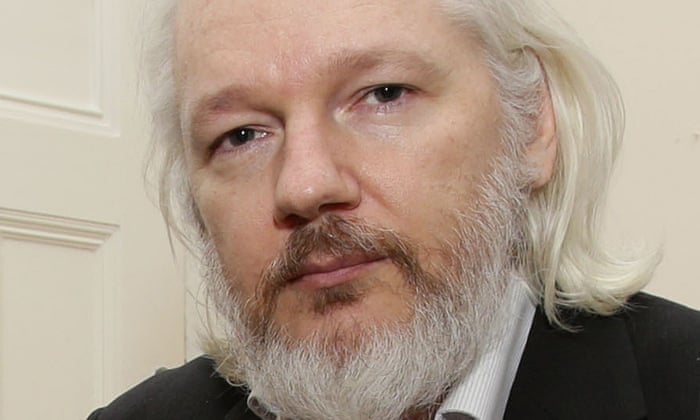
Julian Assange: Fancy dress plan to escape embassy


WikiLeaks founder Julian Assange pictured on August 21, 2015 with Reverend Jesse Jackson on a balcony at the Ecuadorian embassy in London Picture: PA/Yui Mok

Staff at the Ecuadorian embassy, where the WikiLeaks founder fled more than three years ago, drew up elaborate plans to help him escape

The embassy in London where Julian Assange has chosen to remain for more than three years considered getting rid of their long-term guest by helping him flee in fancy dress, it has emerged.

Leaked documents showed Ecuadorian diplomats were becoming increasingly concerned about Mr Assange’s behaviour and drew up a number of bizarre plans to allow him to leave the building without being arrested by waiting police officers.

Ecuador's foreign minister Ricardo Patino (left) with WikiLeaks founder Julian Assange in the embassy in August last year John Stillwell/PA

Mr Assange, founder of the WikiLeaks website, claimed asylum from Ecuador in June 2012 to avoid being extradited to avoid questioning over rape and sexual assault allegations in Sweden. He has not left the building since. 

One option set out by diplomatic staff was to help Mr Assange make a rooftop flit to a nearby helipad.

Other proposals included dressing him in a disguise so he could walk unrecognised out of the building in Knightsbridge, west London, or dash out and becoming lost in crowds of shoppers at Harrods department store just yards away.

“Assange could leave in fancy dress or try a discreet exit,” said one document.

“He can try to reach a nearby helipad across the rooftops, or he could get lost among the people in Harrods.”

It was already known that police had anticipated another possible exit-strategy, of concealing Mr Assange in a diplomatic bag.

Police outside the embassy in Knightsbridge WILL OLIVER/AFP/Getty Images

The papers disclosed that was ruled out by embassy officials because Scotland Yard deployed body heat scanners outside the embassy.

The documents, reported by the Ecuadorian journalist Fernando Villavicencio and the Buzzfeed website, also showed how several incidents involving Mr Assange’s behaviour inside the embassy caused his hosts concern.

In September 2012 he was discovered in the security control room, which was off-limits, and was said to have been tampering with equipment.

Julian Assange addresses supporters and media from a balcony at the Ecuadorian embassy in London in August 2012 Julian Simmonds/The Telegraph

The papers were said to detail a security guard’s allegation that Mr Assange then punched over a computer screen and grabbed him by the shirt.

However, Mr Assange’s contradictory account blamed the security guard for accosting him.

It led to a meeting of embassy officials, who describe Mr Assange as “Mr Guest”, which set out how he should know his limits within the building.

In January 2013 another incident occurred in which a loud crash was heard from inside Mr Assange’s quarters in the embassy just after 6am.

A security guard asked the WikiLeaks chief if he was in difficulty, at which point Mr Assange took his laptop into a bathroom where he remained for some time.

The guard took photographs of a tall bookcase which was lying face-down in the room.

Mr Assange told embassy staff later that the bookcase had fallen over of its own accord.

Julian Assange: wanted for questioning over rape allegations AP

The dossier of leaked information also revealed staff were concerned about Mr Assange’s “evident anger” and “feelings of superiority”.

It continued that his behaviour was causing stress to those around him, “especially the personnel who work in the embassy, mainly women”.

Amid concern for Mr Assange’s wellbeing, the documents said that officials in the building should “control access to alcohol”.

Mr Assange’s lawyers contends that if he was sent to Sweden he would subsequently be at risk of being extradited to the US, where he believes he would face political persecution for WikiLeaks’ disclosures of sensitive information.

Mr Assange, 44, was alleged to have raped a woman known as SW, then aged 26, and committed other sexual offences against AA, a 31-year-old woman.

The lesser sexual allegations have now lapsed because of the Swedish statute of limitations, or the maximum time within which criminal charges must be brought, but the rape allegation could see charges brought as late as 2020.

The bill for policing the embassy, in order to arrest Mr Assange if he emerges, has reached an estimated cost of up to £11 million.

A Scotland Yard spokesman refused to comment

Inside the UK's worst detention centre: 'Hell must be better than that place'

A female detainee complains about conditions in Yarl's Wood

Yarl's Wood has been called a 'place of national concern' in a report by the prison watchdog. In the second of a new series, Radhika Sanghani hears from a 22-year-old female detainee about how bad life really is inside

Efie* had been in the UK for several months, volunteering with a learning disabilities charity. When her placement came to an end she went back to her native country of Ghana.

She expected a happy reunion with her family. Instead, she was taken to meet the man her father had arranged for her to marry - without her knowledge.

Efie was just 22, but the man was 57. He already had three wives and she was expected to be his fourth.

Her family tried to force her into the union, but Efie escaped. With the help of the Belfast-based charity she’d been working with, she managed to flee and come back to the UK.

“I didn’t know what to do,” she tells me, now aged 24. “I didn’t want to be forced into the marriage. But when I got here, I still wanted a relationship with my family so I was trying to speak to them. At my age it’s hard to lose your family and I was alone.

“I tried to communicate with them but it didn’t work. My father started to threaten me in emails. He said you’d better kill yourself before I kill you. I thought I’m going to lose my life if I go home. I really do think they would kill me.”

At that point Efie decided to claim asylum in the UK. She made the appropriate appointments with the Home Office and began reporting-in every month.

Until one day, in September last year, when she went for her regular meeting and was told she was going to be deported.

A security guard stands at the gates of the the Yarl's Wood Immigration Centre near Bedford Getty Images

“I was terrified. They drove me to the airport but it was stopped last minute,” she explains. “So I was taken to Yarl’s Wood.”

Yarl’s Wood detention centre is a facility that mainly houses female immigrants and asylum seekers. It has a reputation for being one of the worst centres in Britain – to the point where the chief inspector of prisons recently called it ‘a place of national concern’.

“Hell must be better than that place,” says Efie. “You’re not a criminal but you’re treated like one. I was just there because I came to the UK to save my life. I hadn’t done anything wrong. I hated it there.”

Efie has long suffered from mental health problems. She was diagnosed with depression before going into Yarl’s Wood and was on antidepressants when she was sent there. She says her condition seriously deteriorated inside the detention centre.

“I didn’t get any help. I didn’t see a counsellor. I just didn’t know what life was anymore. Most of the time I hit myself. It was all just too much for me.”

After being inside the centre for several weeks, she tried to kill herself.

“I jumped down the stairs. I couldn’t take it anymore. There was no reason for me to live if I was going to die when I got home. It’s better to die here. At least they’d bury me here. At home no one will take my dead body.”

Thankfully she survived the fall, and was not seriously injured. But a psychiatrist told her she needed urgent counselling.

Efie ended up staying in Yarl’s Wood for another five months, only leaving in February this year.

The counselling never materialised.

Instead she was put on suicide watch, meaning guards followed her around constantly. Female guards would come into the bathroom with her; while male guards would come into her room, at hourly intervals, throughout the night.

“I didn’t have any privacy,” she says. “Sometimes they’d shout and could be very aggressive. It all made me feel worse.”

She says that the healthcare system was awful – for other medical problems, too.

“Even for other problems when you say you have pains, they tell you you’re lying and making it up because of your immigration status.”

She says she once went to the healthcare specialist on site after finding it painful to urinate. “I had stomach pains and I would pee blood. They found the blood in my pee, did tests and said I needed a scan.

An image of the bedrooms in Yarl's Wood. Photo: yarlswood.co.uk

“But they said they didn’t have enough escorts to take me to the hospital, so I had to wait. The scan never happened. I just stopped drinking water, so I didn’t pee.”

A Home Office spokesman said: "Working with our partners, we want to make sure standards in the centre improve, especially regarding the provision and delivery of healthcare.

"We are committed to treating all detainees with dignity and respect. We aim to protect the health and wellbeing of those we are detaining at all times, so we are pleased that this report finds that 80 percent of detainees surveyed said staff treated them with respect."

He added they will review the report of Yarl's Wood, and take action where appropriate.

Efie is finally out of Yarl’s Wood and living in Belfast. But she has no idea what will happen to her in the future and is still dealing with her depression. Her suicidal urges have passed now she’s not being detained, and she is hoping to get professional help.

“I just hope for the best. I don’t really even care that much anymore because there’s no life for me. I don’t want to get close to my family because I don’t know what they’ll do to me next. But hopefully, I don’t know, something good will happen.”

*Efie's name has been changed to protect her identity

Telegraph UK

I’m willing to have sex for the first time on national TV


"Bachelor in Paradise" beauty Ashley Iaconetti is ready to give up her virginity on reality TV. Photo: Getty Images

Ashley Iaconetti is ready to lose it — her virginity, that is.

After weeks of pining (and serial stalking) “Bachelorette” alum Jared Haibon on this season’s “Bachelor in Paradise,” the ballsy brunette wants to take their relationship to the next level — and needs host Chris Harrison’s help to do so.

But following her arrival, Jaclyn Swartz, Paradise’s latest visitor, makes an immediate play for Jared, much to the dismay of Ashley I.

“I’m not going to let her take Jared away from me,” seethes Ashley. “I’m winning him over. Tonight is literally do or die.”

While Jaclyn sinks her claws into an unsuspecting Jared (better known as Kaitlyn Bristowe’s “reject”), Ashley channels her inner Sherlock Holmes to hunt down Harrison. As luck would have it, the “Bachelor” patriarch happens to be lurking nearby.

“I want time alone together with Jared without any cameras, so I would like a date that would lead to the Fantasy Suite,” protests the New Jersey native. “I want an overnight date with Jared, because there is just no more time left.”

Feeling generous, Santa Harrison gifts Ashley an early Christmas present.

Just as Jaclyn asks baby-faced Jared out on a date, Ashley leaps back to the Mexican compound with a seductive offer of her own, sparking the brown-eyed cutie’s fancy as he agrees to a sexy sleepover.

“I am so happy. I’m really nervous, but I’m also excited,” Ashley exclaims like a giddy schoolgirl. “This is one of the biggest nights of my life.”


Ashley I. invites Jared to spend the night with her in the Fantasy Suite.Photo: Getty Images

As Jared chugs what’s left of his cocktail, Ashley primps and preps in her bungalow — fantasizing about what lies ahead.

“Tonight’s a huge night. I feel like it’s the turning point for my relationship with Jared,” the self-proclaimed virgin professes as she dabs her lips with sultry red gloss. “The Fantasy Suiteusually goes along with thoughts of sex. I am physically attracted to Jared enough that I am fine with the thought of doing anything.”

Rocking a Taylor Swift-inspired crop top with black skinny jeans, Ashley takes Jared by the hand as she gets ready to go behind closed doors today.

“I don’t know what’s going to happen tonight,” she says, “but I may not be a virgin tomorrow.”

Metro UK

Julian Assange 'told Edward Snowden not to seek asylum in Latin America'


WikiLeaks founder says he told the NSA whistleblower he could be kidnapped or killed, and that he was better off sheltering in Russia despite ‘negative PR’

Julian Assange also accused US officials of breaking the law in their pursuit of him and his whistleblowing organisation. Photograph: Yui Mok/PA

Julian Assange has said he advised the NSA whistleblower Edward Snowdenagainst seeking asylum in Latin America because he could have been kidnapped and possibly killed there.

The WikiLeaks editor-in-chief said he told Snowden to ignore concerns about the “negative PR consequences” of sheltering in Russia because it was one of the few places in the world where the CIA’s influence did not reach.

In a wide-ranging interview with the Times, Assange also said he feared he would be assassinated if he was ever able to leave the Ecuadorian embassy in London, where he sought asylum in 2012 to avoid extradition.

He accused US officials of breaking the law in their pursuit of him and his whistleblowing organisation, and in subjecting his connections to a campaign of harassment.

WikiLeaks was intimately involved in the operation to help Snowden evade the US authorities in 2013 after he leaked his cache of intelligence documents to Glenn Greenwald, then a journalist with the Guardian.

Assange sent one of his most senior staff members, Sarah Harrison, to be at Snowden’s side in Hong Kong, and helped to engineer his escape to Russia – despite his discomfort with the idea of fleeing to one of the US’s most powerful enemies.

“Snowden was well aware of the spin that would be put on it if he took asylum in Russia,” Assange told the Times.

“He preferred Latin America, but my advice was that he should take asylum in Russia despite the negative PR consequences, because my assessment is that he had a significant risk he could be kidnapped from Latin America on CIA orders. Kidnapped or possibly killed.”

However, Assange’s story appears to be at odds with reports from the time, which detail a plan hatched to whisk Snowden from Russia, where he was stuck in the transit area of Moscow’s Sheremetyevo airport after his US passport was revoked, and into political asylum in Ecuador.

In a statement issued as the drama unfolded, WikiLeaks said of Snowden: “He is bound for the republic of Ecuador via a safe route for the purposes of asylum, and is being escorted by diplomats and legal advisers from WikiLeaks.”

But the plan unravelled after Ecuador’s president, Rafael Correa, declared invalid a temporary travel document issued by his London consul – in collaboration with Assange – after other Ecuadorean diplomats said in leaked correspondence that the Wikileaks founder could be perceived as “running the show”.

Correa went on to criticise the consul, Fidel Narvaez, telling the Associated Press that to have issued the document – which was thought to have been used by Snowden to travel from Hong Kong to Moscow – without consulting Quito was a serious error.

In his Times interview, Assange also outlined his own fears of being targeted. He said that even venturing out on to the balcony of Ecuador’s embassy in Knightsbridge posed security risks in the light of bomb and assassination threats by what he called “unstable people”.

He said he thought it was unlikely he would be shot, but that he worried that if he was freed he could be kidnapped by the CIA.

“I’m a white guy,” Assange said. “Unless I convert to Islam it’s not that likely that I’ll be droned, but we have seen things creeping towards that.”

Ecuador granted the Australian political asylum in 2012 under the 1951 refugee convention.

He believed he risked extradition to the US from the UK and Sweden, where he is under investigation for his involvement with WikiLeaks. He also faces extradition to Sweden for an investigation into an alleged rape.

He has remained in the embassy for nearly three years, with a round-the-clock police guard thought to have cost more than £11m. Assange believes his situation will be resolved in the next two years.

Gay Law: God vs. the Constitution in Kentucky


Kim Davis gestures as she refuses to issue marriage licenses to a same-sex couple in Morehead, Kentucky. 

Apparently, you can appeal a Supreme Court ruling to a higher authority.


Kim Davis, the defiant Kentucky county clerk who responded to the Supreme Court’s June ruling legalizing same-sex marriage by refusing to issue marriage licenses to anyone, period, has lost before every court that has considered her case, including, most recently, the Supreme Court itself.


Rather than accept that verdict, and the fact that she lives in a secular constitutional democracy, Ms. Davis has decided to quadruple down, refusing, under the glare of dozens of news cameras, to license two same-sex couples on Tuesday morning.

When she was asked under what authority she was claiming the right not to do her job, she said, “under God’s authority.”

One of Ms. Davis’s sympathetic co-clerks, Casey Davis, claimed that this is not about preventing same-sex marriage. “We’ve only tried to exercise our First Amendment rights,” he said.

Well, no.

To quote Justice Antonin Scalia in a recent case involving another First Amendment claim of religious freedom, “This is really easy.”

In short, Ms. Davis has no right, constitutional or otherwise, to refuse to do the job Kentucky pays her to do. As a municipal official, she is required to issue marriage licenses to anyone who may legally get married. Since June 26, when the Supreme Court ruled that the Constitution forbids states to ban same-sex marriage, that population includes April Miller, Karen Roberts, David Ermold and David Moore — the two couples she rebuffed on Tuesday.

The Davises don’t seem to understand the two-sided game they’re playing, appealing to the Constitution even as they violate it. Perhaps they forgot that the First Amendment protects the people from the government, not the other way around.

Ms. Davis’s lawyers defend her refusal to issue marriage licenses to same-sex couples by arguing that “this searing act of validation would forever echo in her conscience.”

In that case Ms. Davis faces two options, in reverse order of self-determination. She may resign and find another job that does not require her to violate her religious beliefs. (As an elected official, she can’t be fired, although she could be impeached.) Or she may be held in contempt of court, which would involve fines and, possibly, a trip to the county jail. A contempt hearing has been set for Thursday in federal court.

Civil disobedience is an honorable American tradition, of course, and if that’s the way Ms. Davis wants to register her disagreement with the law, that’s her prerogative — at least until she is dragged out of the clerk’s office.

But it’s worth repeating once again: No one is telling Ms. Davis what she may or may not believe, or how to live her own life in accord with the dictates of her conscience and her God. What they are saying is that as an employee and representative of the government, she lives under the law, not above it.

Football Transfer Window 2015: The lessons learned

Real Madrid cannot stage manage everything, where are all the 'Galacticos' plus other points raised during summer window


The ones that got away: Cavani, Benzema, Neymar and Bale are not coming to a Premier League club near you Photo: GETTY IMAGES

You can't always get what you want
Currently the 20 Premier League clubs share television payments of £1.3bn a year, but that will rise to at least £2.5bn for the three seasons from 2016-17. Simply but earthily put, every club now has 'eff off' money - the ability to resist offers for players they do not want to sell unless the offers are inordinate. Everton told Chelsea to do one over John Stones as did West Bromwich Albion to Tottenham over Saido Berahino and Southampton to Tottenham over Victor Wanyama. Even formal transfer requests making a comeback years after player candour seemed to be facing extinction could not force clubs to part with assets they would rather keep.

Tottenham have had a third bid rejected for Saido Berahino

It's a seller's market
Something that Daniel Levy, the Spurs chairman, seemed only to appreciate when making Manchester United sweat over Michael Carrick and Dimitar Berbatov or ensuring that Real Madrid paid top whack for Luka Modric and Gareth Bale. But trying to drive a hard bargain by stalling for time when purchasing a player from a well-run Premier League rival just doesn't work any more. Yes, you can nail a virtually potless Leeds United to the floor for Paul Robinson and Aaron Lennon more than a decade ago, but you are simply deluding yourself if you believe the same hard-nosed, wheeler-dealer, 'play it my way or I'll walk away' approach is practical. Had they met the asking price for a player they wanted, Tottenham would have got their man. By trying to play the old game of one-upmanship and Call My Bluff, Spurs are left with a gaping hole in their squad.

Real Madrid cannot stage manage everything
The contrasting non est mea culpa statements released by Real Madrid and Manchester United on Tuesday to try to control the narrative over the failure of David de Gea's transfer raised more questions than they answered though Real's was much the most self-serving. Whether or not they jibbed on the deal at the last moment because their concerns over paying a fee for a player who could join them for free in 10 months or whether they were spooked by their fans' support for Keylor Navas and ambivalence towards the former Atletico goalkeeper or even if there was an administrative cock-up, it again emphasises why leaving things so late is fraught with danger. But Real under Florentino Perez are addicted to their self-mythologising as the ultimate transfer market masters and their desire to present themselves as 'winning' the deal by cavilling over the price and delaying to give themselves a dramatic late, late signing to present ultimately cost them dear.

The Premier League is full of Herberts
Well, we knew that already but specifically the clubs, thanks to the TV deal and the phenomenal global marketing success, are now Europe's Stan and Pam Herbert, the Black Country characters played by Harry Enfield and Kathy Burke, who are "considerably richer than you". Only a handful of elite Champions League clubs - Barcelona, Real Madrid, Atletico Madrid, Juventus, Bayern Munich, Borussia Dortmund and Paris Saint-Germain - have greater spending power than a club making its Premier League debut. European Cup winners with rich histories and stellar pedigrees - Ajax, Hamburg, Benfica - cannot compete with the English nouveau riche. Whether this is good for European football is by-the-by; it cannot be good for the long-term health of English football if a club can raid Europe for its middle-ranking talent rather than developing its own. With yet more money due in 2016-17, this short-termism will be impossible to shift.

Quality deficit
Even after Chelsea's signing of Pedro, a World Cup winner, the ranks of the Premier League's stock of 'Galacticos' or their less-hyped predecessor category 'world-class players' has barely been swelled by the £864,000,000 jamboree. Raheem Sterling may well become a world-class player if, by that, we mean someone who would get into a 23-man squad to play Mars and so might Anthony Martial, Memphis Depay and possibly Kevin de Bruyne of this summer's movers. But they're not there yet which leaves us with Bastian Schweinsteiger, fitness permitting, to sit alongside Sergio Aguero, Vincent Kompany, Eden Hazard, David Silva, Alexis Sanchez and De Gea with hopes that Philippe Coutinho, Ross Barkley and Stones can join them. Still, never mind the quality, feel the width.

Who you going to call? Jorge Mendes
On summer transfer deadline day last year Manchester United, in need of a striker, turned to a Jorge Mendes client at Monaco, Radamel Falcao.This year with an even more pressing need for a forward they again turned to a Mendes client at Monaco and paid an eye-watering £36 million for a teenager who has played 52 professional matches. That means Mendes has provided Manchester United with their last two No 9s. If it is true that Tottenham balked at a 20m Euro asking price earlier in the summer and Manchester United have succeeded with a bid of two and half times that size, it does make one wonder how much their procrastination over the summer is costing them. And we should remind them that for every spectacular profit they have made on a Mendes client - Cristiano Ronaldo, perhaps still on De Gea - significant losses have been incurred on Anderson, Bebe, Nani and Angel Di Maria.

Super-agent Jorge Mendes (left) held the key to Chelsea's Radamel Falcao deal

The Telegraph

“Buhari, APC desperate for victory, plotting transfer of Tribunal judges” – PDP

Metuh

The Peoples Democratic Party (PDP), Tuesday, said it has uncovered fresh plots by the APC-led administration to tinker with the composition of the election tribunals in Rivers and other PDP states, “with a view to import pliable judges to overturn the party’s victory in the last general elections”.

The party said it has “concrete evidence that the APC administration in its desperation is set to transfer uncooperative tribunal judges and replace them with malleable ones to overturn PDP’s electoral victory in Rivers, Akwa-Ibom, Abia, Taraba and Delta States and hand them over to the APC”.

PDP National Publicity Secretary, Chief Olisa Metuh, said “following the insistence by some tribunal judges on delivering justice, despite the pressure being mounted by the APC government, machineries have been put in motion to influence the outcome of the judicial process by replacing them with those already briefed to do the bidding of the APC government.”

The party further alerted that “part of the plot is to use the Department of State Services (DSS) and some unscrupulous officials of the independent National Electoral Commission (INEC) to tamper with official records of evidence and other electoral documents in INEC’s custody for presentation at the tribunals, which would be manned by the compromised judicial officials”.

“We have uncovered an unholy alliance between the DSS and INEC to interfere directly in the activities of election tribunals in some PDP states by removing and altering some records in INEC and instigating the APC to insist that there were no elections in those states.

“You will recall that after the elections, the former INEC Chairman, Prof. Attahiru Jega insisted and showed to the whole world that there were governorship elections in Rivers, Abia, Taraba, Akwa-Ibom and Delta states. However, upon prodding by the APC, the DSS and INEC are already interfering with the electoral process by using some persons in INEC to doctor the results and change the true position of affairs regarding the elections in these states.

“Secondly, we want to inform the nation that any moment from now, some tribunal judges in these states have been marked for transfer. We had earlier informed Nigerians that the DSS was already meeting with some INEC and tribunal officials ostensibly to compromise the process. Now we have found out that because some tribunal members were not cooperating, they have concluded plans to replace them with pliable ones. The PDP is alerting the entire nation and the international community of this devious development, which is a direct assault on our democracy.

“You will recall that we have always patiently explained situations that are dangerous to the progress and sustenance of democracy in this country. This is one of them. This is a coup against democracy. The question is, why are they interfering with the process and why would they want to remove judges after they have started hearing the cases?

“The PDP insists that the judiciary should not be interfered with, and should be allowed to play its role in our democracy. The APC should stop harassing, intimidating or attempting to remove judges who are not responding to their dirty tricks

“We insist on the sanctity of the process and caution strongly that we will not accept any move by any person whatsoever to undermine the will of the people and rob us of our well deserved electoral victory in these states”, the party said.

Insisting that it was armed with overwhelming evidence against the APC, the PDP recalled that when it raised the issue of the Director General of the DSS, being an APC member, the APC put up a denial only to be silenced when it came up with evidences including pictures and publications showing his affinity with the party.

In the same vein, the party recalled that when it raised the issue of nepotism in the illegal appointment of an Acting Chairman of INEC, a position unknown to the nation’s constitution, the APC presented a lame denial only also to be silenced after it presented evidences of nepotism.

While directing its members and all well-meaning Nigerians to be on the alert, the PDP urged the judiciary to ensure that it is not compromised by the APC-led government to go against the law and the demands of justice, which it swore to protect at all times.

Counting to 100: What promises did Buhari make to Nigerians?


President Muhammadu Buhari on Day one at Presidential Villa

Nigeria’s politicians are never short on promises. After 16 years of rule by a party which oversaw rising corruption, growing poverty levels, and a failing war against Boko Haram insurgents, its population has grown used to them being broken.

Still, many Nigerians hope that those of their new president, Muhammadu Buhari, will prove stronger.

When he promised “change” ahead of March elections, Nigerians voted him in with a hefty majority, bringing about the first such democratic power transfer in the country’s history. So is Buhari delivering? Or as he approaches 100 days in power, due on September 5, is he “failing” already?

Page-upon-page of pledges before election

The 100-day marker has been used to gauge presidential effectiveness ever since it was pioneered by Franklin D. Roosevelt, who inherited the depression-stricken American economy in the 1930s. The idea is that governments can be at their most effective at their dawn, when their political capital is high, their leadership fresh, and their control of parliament strong. The work they do early on can serve as a model for the future.

In almost two decades of civilian rule, Nigeria has also taken to measuring its politicians on their early performance. Both before and since the election, the Nigerian media has reported widely on a series of promises they say were made by Buhari and his campaign team ahead of the poll.

The main source for this appears to be the president’s “Covenant with Nigerians”, which was distributed to the media before the vote and contains page-upon-page of pledges. In it, the president vows to “Publicly declare my assets and liabilities” and to “Ensure that… no force, external or internal, will occupy even an inch of Nigerian soil”. He also says he will “Unveil a health sector review policy”; “Address the gaps in power sector privatisation”; and “Ensure that all children of school age… are in school”.

These were widely reported at the time as pledges to be carried out in the first 100 days, setting out “what Nigerians should expect from Buhari’s first 100 days in office” according to one report and “what I will do in my first 100 days”, according to another.

But as September 5 approaches, a row has broken out over whether or not Buhari and his team made any commitment to achieve the promises within his first three and a bit months in office.

‘Too late to disown the promises’

Asked by Africa Check, Lai Mohammed, the ruling party’s national publicity secretary, said he was “not aware that [Buhari] promised to deliver anything in his first 100 days”.

The presidential spokesman Garba Shehu went further by saying he “did not fund or authorize” the pamphlet, which in fact makes no mention of achieving the president’s aims within 100 days. He also disowned a reported second document entitled “One Hundred Things Buhari Will do in 100 days”, which Africa Check could not source.

In response to such rebuttals, the Centre for Democracy and Development released an article on Monday arguing: “It is too late for President Buhari to disown the promises, on the basis of which Nigerians voted for him”.

In fact, as Oluseun Onigbinde, one of those behind the CDD’s promise-tracking Buhari Meter, noted, in a speech in the UK in February, then candidate Buhari had already dismissed talk of what should be done within 100 days.

Why Buhari’s campaign team did not correct the widespread reports of the 100 day claim at an earlier point is not yet clear.

Population may grow less patient
Of course, meeting the full set of promises attributed to the president would be a tall order for the first 100 days of any government, let alone one shackled by the interests of an old political elite which doesn’t share the president’s distaste for dirty dealings.

During his first three months in office, Buhari has focused on launching a multinational force to fight Boko Haram insurgents in the north-east, and on repairing broken relationships with Western partners. He has begun reforms within the opaque state-owned oil company, cancelled unfavourable oil contracts, and started probing public officials, including the former national security adviser Sambo Dasuki.

But the president is yet to name a cabinet and has struggled to gain control of a rebellious national assembly. Jihadists continue to occupy some north-eastern territory and are staging bomb attacks on a weekly basis. Kids are still out of school and hospitals are a mess. Even on measures which he could have delivered alone – notably asset declaration – he has stalled.

Buhari’s popularity is still palpable, but his honeymoon period will soon be over. With his first 100 days behind him, if he struggles to deliver all that he’s promised them, the population may grow less patient. Allowing people to believe the 100-day promises had been made is not a good start.


Eleanor Whitehead is The Economist’s West Africa correspondent, and lives in Lagos.

Premium Times

Video: A guy skinned a watermelon and it looks really creepy

This didn’t need to happen (Picture: YouTube)

You can’t unsee this. Sorry.

This is what a perfectly skinned watermelon looks like.

And you can thank a man called Mark Rober and his creativity, design and science based YouTube channel for showing us this new, and pretty creepy, way to consume watermelon.

His seminal tutorial called ‘How To Skin A Watermelon’ was posted two days ago and has already been viewed over 1.2 million times online. Because, apparently, we just can’t look away.

Here he is showing his party trick to the family.
(Picture: YouTube)

This boy’s face says it all. 
(Picture: YouTube)

And here’s how he did it.

You need two watermelons of a similar shape and size.
(Picture: YouTube)

Then you cut off all the green.
(Picture: YouTube)

After harnessing your ‘inner fruit ninja’ and removing all the white flesh, you get out a scrubbing pad and smooth it out until it looks like a giant wet, red blood clot. Sorry, but it does.
(Picture: YouTube)

Then you simply carve out the second watermelon to create a centrepiece that will terrify your guests and leave them wondering what’s in the basement.
(Picture: YouTube)

Fun times.
(Picture: YouTube)

If you too want to have your neighbours looking over their shoulders every time they leave the house, here’s the full how-to.

Watch Video here:


Metro UK

Video: There’s a massive secret underground pipeline in the UK, but why is it there?

Reveal your secrets! (Picture: Tom Scott/Youtube)

It might not look like much, but this pipe is one of the most important things in the UK.

The pipe was constructed in WWII to transport aviation fuel safely across the country underground – protecting it from German bombers.

Since the war it has been expanded, and now fuels almost every major airport in the country…

…including military runways.

That is why this massive pipe network is also a secret – no one outside of the government knows the exact location of all the pipes.

You can hear about Tom Scott’s efforts to learn about his efforts to learn the location of the underground pipe via a Freedom Of Information request in the video below (but unfortunately he was unsuccessful).

So next time you are about to sink a pick-axe into the ground, remember that there might be a pipeline full of jet fuel behind your feet.

Watch Video here: 

Tuesday, 1 September 2015

Jet-setting benefits cheat secretly filmed lugging suitcases before luxury holiday

Court hears Kevin McEntee, 64, and his former wife Pauline, claimed they were both significantly disabled and in need of care


Kevin McEntee and his former wife Pauline, pictured while they were on holiday Photo: Department for Work & Pensions /PA

A £70,000 benefits cheat who said he couldn't walk was secretly filmed pulling two suitcases through an airport before jetting away on a luxury holiday to Australia with his wife.

During a 12-year period, fraudster Kevin McEntee, 64, of Birkenhead, Merseyside, enjoyed a lavish lifestyle which included 19 foreign cruises with his former wife Pauline, while claiming that they were both significantly disabled and in need of care.

Kevin McEntee on holiday in Oriana in the Mediterranean on a P&O cruise Photo: Ross Parry / SWNS

In reality, McEntee - who claimed to be housebound and needed a walking frame - was part of a cycle club, riding twice a week while making renewed claims for Disability Living Allowance for himself and wife totalling £68,924.45.

He was jailed for two years after Liverpool Crown Court heard that he had "grossly exaggerated the extent of his difficulties" and had enjoyed as many as three holidays a year around the Mediterranean, Brazil and the Caribbean.

The court heard that some of the trips were taken in the weeks before or after a claim was made.

Surveillance footage of Kevin McEntee at Manchester Airport shows him "moving without apparent difficulty" Photo: Ross Parry / SWNS

He was filmed in 2013 at Manchester Airport "moving without apparent difficulty" and walking for half a mile.

In respect of his claim, McEntee had fraudulently claimed £48,000 from the public purse and more than £20,000 on behalf of his wife.

Kevin McEntee and his former wife Pauline went on luxury holidays Photo: Department for Work & Pensions /PA

He was found guilty of five offences of benefit fraud after trial.

Jailing him, Judge Andrew Menary QC said: "You did so for the simple and dishonest purpose of taking advantage of a benefit to which you knew full well that neither you or your wife was entitled.

"Anyone looking at the forms would have assumed that they were dealing with a couple who were very seriously disabled."

In 2000, unemployed McEntee who been involved in an industrial injury in 1996, claimed that following a heart attack he needed a walking stick, regularly fell and was not able to walk 25 metres.

He said he that needed help bathing, getting out of bed and help cutting up his food.

He was rewarded Disability Living Allowance and had a blue disabled badge for his car.

"The fraud funded an obviously lavish lifestyle. Despite being unemployed for some years, you were able to afford to buy and service an expensive bike and you enjoyed the many cruises and foreign holidays."
Judge Menary

It was not disputed that McEntee had suffered medical complaints including osteoarthritis, cervical spondylosis and depression - but the extent to how it affected his daily activities were "deliberately exaggerated".

Judge Menary accepted that although he had suffered from long-standing and genuine medical problems, they "did not have the profound and substantial impact" on his mobility like he had repeatedly claimed.

The prosecution told the trial that six weeks after suffering a heart attack in 1999, McEntee was able to undertake a Mediterranean cruise.

A further claim in 2002 told how his condition had got "worse" and he could not use a pen to write.

Mr McEntee claimed that he needed help bathing, getting out of bed and help cutting up his food Photo: Department for Work & Pensions /PA

In 2010, he completed the first of his wife's renewal forms stating that she had virtual incontinence and was housebound. A further claim reiterated this.

On a last claim in 2012, he stated that his own condition had deteriorated and walked with a frame - being unable to walk more than three metres and that he was agoraphobic.

Photographs of foreign holidays showed this not to be the case and witnesses described that Pauline was able to line-dance.

In mitigation, Mr Eric Lamb said that the claim had not been fraudulent from the outset and he was of previous good character.

He added that he had been bullied at school and a custodial sentence would be "a shock".

Judge Menary added: "The sad reality is that very little, if any, of this was true and any member of the public who hears or reads about this case and discovers what you and your wife were doing and fully able to do, of the lifestyle you both enjoyed throughout this period would be entitled to feel complete outrage."

The court was told that McEntee had played "a leading role" in the fraud involving his and his wife's claims, but the judge said he could not determine if she had been actively involved.

He added: "The fraud funded an obviously lavish lifestyle. Despite being unemployed for some years, you were able to afford to buy and service an expensive bike and you enjoyed the many cruises and foreign holidays."

The Telegraph

History: BLACKS DURING THE HOLOCAUST


Nazi propaganda photo depicts friendship between an "Aryan" and a black woman. The caption states: "The result! A loss of racial pride." Germany, prewar.
— US Holocaust Memorial Museum


The fate of black people from 1933 to 1945 in Nazi Germany and in German-occupied territories ranged from isolation to persecution, sterilization, medical experimentation, incarceration, brutality, and murder. However, there was no systematic program for their elimination as there was for Jews and other groups.

After World War I, the Allies stripped Germany of its African colonies. The German military stationed in Africa (Schutztruppen), as well as missionaries, colonial bureaucrats, and settlers, returned to Germany and took with them their racist attitudes. Separation of whites and blacks was mandated by the Reichstag (German parliament), which enacted a law against mixed marriages in the African colonies.

Following World War I and the Treaty of Versailles (1919), the victorious Allies occupied the Rhineland in western Germany. The use of French colonial troops, some of whom were black, in these occupation forces exacerbated anti-black racism in Germany. Racist propaganda against black soldiers depicted them as rapists of German women and carriers of venereal and other diseases. The children of black soldiers and German women were called “Rhineland Bastards.” The Nazis, at the time a small political movement, viewed them as a threat to the purity of the Germanic race. In Mein Kampf (My Struggle), Hitler charged that “the Jews had brought the Negroes into the Rhineland with the clear aim of ruining the hated white race by the necessarily-resulting bastardization.”

African German mulatto children were marginalized in German society, isolated socially and economically, and not allowed to attend university. Racial discrimination prohibited them from seeking most jobs, including service in the military. With the Nazi rise to power they became a target of racial and population policy. By 1937, the Gestapo (German secret state police) had secretly rounded up and forcibly sterilized many of them. Some were subjected to medical experiments; others mysteriously “disappeared.”

The racist nature of Adolf Hitler's regime was disguised briefly during the Olympic Games in Berlin in August 1936, when Hitler allowed 18 African American athletes to compete for the US team. However, permission to compete was granted by the International Olympic Committee and not by the host country.

Adult African Germans were also victims. Both before and after World War I, many Africans came to Germany as students, artisans, entertainers, former soldiers, or low-level colonial officials, such as tax collectors, who had worked for the imperial colonial government. Hilarius (Lari) Gilges, a dancer by profession, was murdered by the SS in 1933, probably because he was black. Gilges' German wife later received restitution from a postwar German government for his murder by the Nazis.

Some African Americans, caught in German-occupied Europe during World War II, also became victims of the Nazi regime. Many, like female jazz artist Valaida Snow, were imprisoned in Axis internment camps for alien nationals. The artist Josef Nassy, living in Belgium, was arrested as an enemy alien and held for seven months in the Beverloo transit camp in German-occupied Belgium. He was later transferred to Germany, where he spent the rest of the war in the Laufen internment camp and its subcamp, Tittmoning, both in Upper Bavaria.

European and American blacks were also interned in the Nazi concentration camp system. Lionel Romney, a sailor in the US Merchant Marine, was imprisoned in the Mauthausen concentration camp. Jean Marcel Nicolas, a Haitian national, was incarcerated in the Buchenwald and Dora-Mittelbau concentration camps in Germany. Jean Voste, an African Belgian, was incarcerated in the Dachau concentration camp. Bayume Mohamed Hussein from Tanganyika (today Tanzania) died in the Sachsenhausen camp, near Berlin.

Black prisoners of war faced illegal incarceration and mistreatment at the hands of the Nazis, who did not uphold the regulations imposed by the Geneva Convention (international agreement on the conduct of war and the treatment of wounded and captured soldiers). Lieutenant Darwin Nichols, an African American pilot, was incarcerated in a Gestapo prison in Butzbach. Black soldiers of the American, French, and British armies were worked to death on construction projects or died as a result of mistreatment in concentration or prisoner-of-war camps. Others were never even incarcerated, but were instead immediately killed by the SS or Gestapo.

Some African American members of the US armed forces were liberators and witnesses to Nazi atrocities. The 761st Tank Battalion (an all-African American tank unit), attached to the 71st Infantry Division, US Third Army, under the command of General George Patton, participated in the liberation of Gunskirchen, a subcamp of the Mauthausen concentration camp, in May 1945.

Holocaust Encyclopedia

Woman jailed for outrageously loud sex is back in court for banging

Gemma Wale has been fined for noise pollution (Picture: NTI)

A woman who woke her neighbours at 5am for having extremely loud sex has been given another fine for noise pollution.

However, Gemma Wale, 23, was in trouble for a different kind of banging this time – namely slamming doors and throwing objects.

Her old neighbours in Shard End, Birmingham, said she was a living nightmare and her new neighbours in Bordesley Green are likely to agree.

As a result, she has been ordered to pay £350 for noise pollution’

Magistrates heard she harassed neighbours by banging doors, throwing objects, arguing and shouting over the course of six days in January this year.

Wale admitted a charge of harassment and was fined £150 at Birmingham Magistrates Court on Friday and ordered to pay £200 costs.

An ex-boyfriend, from Bordesley Green, Birmingham, who didn’t want to be named, branded her a disgrace.

The 40-year-old said: ‘She is back screaming, shouting and putting off customers. She is making life difficult for everybody.

‘She was given a two-week sentence but she’s been back walking the streets as if she’s lapping up the fame. It’s a disgrace.’

Metro UK

Nigerian blogger accused of defaming Fidelity Bank MD gets bail


Oloketuyi

A Federal High Court sitting in Lagos has granted bail to Seun Oloketuyi, a blogger, who was remanded at Kirikiri Maximum Prison last week for publishing damning details of an alleged illicit affair of Fidelity Bank Managing Director, Nnamdi Okonkwo.

Mr. Oloketuyi was accused of defaming the banker by publishing on his blog, naijahottestgist, a story of an illicit affair between Mr. Okonkwo and one of the bank’s employees.

He was charged, curiously, by the Special Fraud Unit of the police for the violation of Section 24 (1) (b) of the controversial Cybercrime (Prohibition Prevention) Act and Section 375 of the Criminal Code Act, Cap C38, Laws of the Federation, and was ordered by Justice Mohammed Yunusa to be remanded in jail on August 25, 2015 after the judge refused to admit an oral application for his bail by his counsel, A.A Adetunji.

But when the bail application came up for hearing on Tuesday, Muiz Banire, the legal adviser of the All Progress Congress, APC, who had taken over as the lead counsel of the accused, argued that his client was ambushed by the prosecution and was wrongly sent to prison.

He argued that Section 158 of the Administration of Justice Act 2015 mandates that if one is being charged to court he must be aware of the information to enable him prepare.

He said his client, who had been on an administrative bail, was invited by the police for a discussion only for him to be ambushed by the police and dragged to court.

Mr. Banire also added that since his client was accused of a bailable offence, the Administration of Justice Act makes it the responsibility of the prosecutor to convince the judge why he should not be bailed.

“You cannot bring ordinary sheet of paper before your lordship to charge a person to court for a crime,” he said.

Fidelity Bank Managing Director, Nnamdi Okonkwo

“It would be a trial by ambush. The accused is still presumed to be an innocent man and the offence which he has been charged with is a bailable one, it is an entitlement unless the prosecutor proofs otherwise.

“They took the case to the Special fraud Unit of the police, when there is no evidence of fraud or any mention of fraud in charges against him,” he said.

He therefore urged the judge to use his discretion to grant the accused bail.

He said the accused is an entrepreneur with employees, a father with two children and a wife who just gave birth.

He also informed the judge that the mother of the accused, who is hypertensive was in court despite pleas for her not to come. He argued that the accused was a responsible citizen and had suffered enough having spent one week in the notorious prison.

The prosecutor, Olakanmi Omisope, told the court he “vehemently opposed” the bail application.

He described the blogger as a “serial blackmailer”, saying he was handling another case involving the accused. He urged the court to grant accelerated trial of the case instead of granting the accused bail.

After listening to the arguments of the counsel to the accused and the prosecutor, the judge, Mr, Yunusa, granted the accused bail in the sum of N3 million with two surety in like sum.

He ruled that one of the sureties must be a relation of the accused and the other must have a landed property. He also declared that the prosecutor must be involved in the bail process to make sure that the accused fulfil the bail requirements.

Premium Times